
The Forest Pharmacy: Medicinal Plants & Stingless Bees of Munduk

Before Bali had pharmacies, it had gardens. The island's traditional medicine, jamu, draws on more than a hundred plants, and a remarkable number of them grow within a morning's walk of Desa Eko: turmeric and galangal in the spice beds, moringa along the fences, and a dozen leaves your guide's grandmother could name faster than a botanist.
This tour is a walk through that living pharmacy, ending at one of its strangest and sweetest corners: a hive of bees that cannot sting, producing a honey the Balinese have treated as medicine for generations.
The walk
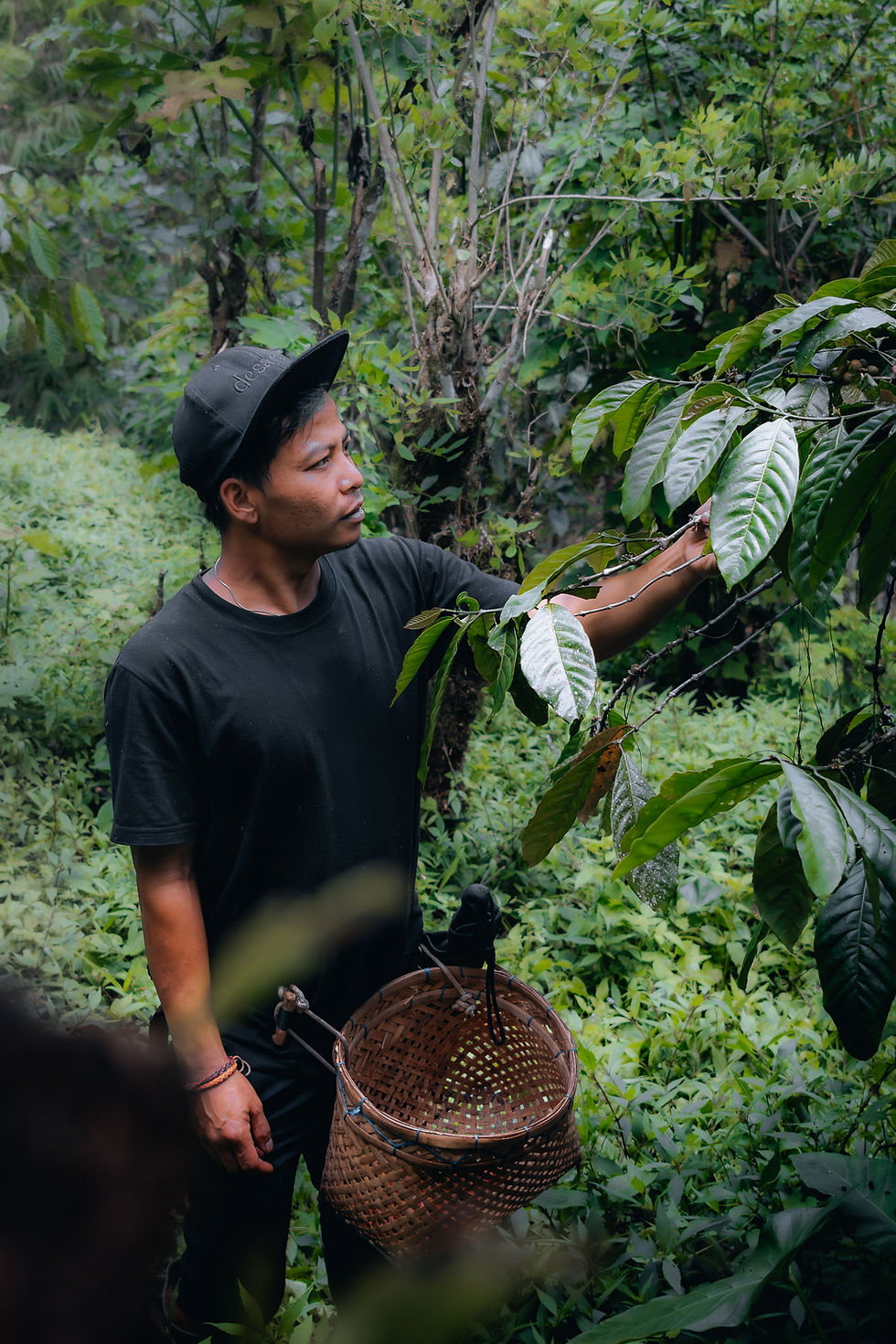
Two and a half unhurried hours with Pak Made, farmer and beekeeper, through his family's land. The route is gentle, about two kilometers of garden paths, and the pace is set by curiosity rather than distance.
The medicine garden
The roll call, in the ground rather than on a label. Turmeric and its wilder cousins, the root of half of jamu's recipes. Kencur, aromatic galangal, the warming heart of the drink called beras kencur. Kaffir lime, lemongrass, pandan, the three that scent both the kitchen and the medicine pot, because in Bali those were never separate rooms. Moringa, the unassuming fence tree whose leaves outclass most supplements. Pak Made explains what each is used for, whether digestion, skin, fever, or postpartum recovery, as family knowledge rather than folklore performance.
The stingless bees
Then the hives. Trigona bees are native to these forests: tiny, black, and entirely stingless, guarding tube-shaped resin entrances instead of the honeycomb architecture you know. Watch them work at arm's length, with no veil, no smoke, no risk.
Their honey is unlike anything commercial: tangier, thinner, faintly citrus, produced in tiny quantities and prized in traditional medicine for antioxidant properties many times those of ordinary honey. You will taste three varieties straight from the hive structures, a flavor of the forest itself, and one you simply cannot buy in a supermarket.
The jamu tasting
The tour closes on Pak Made's porch with four small glasses, mixed from plants you just met:
Kunyit asem, turmeric and tamarind, the everyday tonic
Beras kencur, rice and aromatic galangal, sweet and warming
Wedang jahe, fierce fresh ginger tea
Cincau, grass jelly, the island's original cooling drink
What to bring home
Raw trigona honey at IDR 250,000 a jar, a fraction of its price in Jakarta's health shops. Dried herb bundles for home jamu at IDR 100,000. And the recipe card, which is free and arguably the most valuable item on the table.
Practical details
Duration: about 2.5 hours
Difficulty: easy, garden paths, minimal climbing
Group size: 2 to 6
Cost: IDR 400,000 per person, tastings included
Best time: morning, when the bees are busiest and the day still cool
Sting risk: zero, which is the defining feature of the species
Frequently asked questions
Is this suitable for children? From age six. Stingless bees are the rare wildlife encounter with no caveats.
Is the honey harvested ethically? Yes. Trigona honey is drawn in small amounts from resin pots without destroying the colony, a method far gentler than conventional beekeeping.
Can I take honey through customs? Sealed jars travel fine to most countries in personal quantities. Check your own country's rules; Australia and New Zealand are stricter.
Does it connect with other experiences? Naturally. Many guests pair it with the spice plantation walk for a full day of edible botany, or with a cooking class where several of these plants reappear in the pan.
Why it matters
Knowledge like Pak Made's does not archive itself. It survives by being handed over, farmer to child, and increasingly, farmer to visitor who cares enough to walk the rows. Every tour keeps that hand extended, and keeps a family farm doing what it has always done.
Book at reception or via desaeko.com. Morning slots go first.
Two nights, eight rooms, a thousand metres up. Breakfast, the waterfall trail and the fire come with the room.
Check dates on WhatsApp — it opens a message, not a booking form. Or read what The Quiet actually is.


Comments